
Schering Stiftung

Project 


German Pavilion, 61th International Art Exhibition – La Biennale di Venezia, Sung Tieu, Human Dignity Shall Be Inviolable, 2026. Courtesy the Artist.

German Pavilion, 61th International Art Exhibition – La Biennale di Venezia, Sung Tieu, Human Dignity Shall Be Inviolable, 2026. Courtesy the Artist.
Photo: Andrea Rossetti

:de]Deutscher Pavillon, 61. Internationale Kunstausstellung, Henrike Naumann, Die Innere Front, 2026. Courtesy the Artist.German Pavilion, 61th International Art Exhibition – La Biennale di Venezia, Henrike Naumann, Die Innere Front, 2026. Courtesy the Artist.

:de]Deutscher Pavillon, 61. Internationale Kunstausstellung, Henrike Naumann, Die Innere Front, 2026. Courtesy the Artist.German Pavilion, 61th International Art Exhibition – La Biennale di Venezia, Henrike Naumann, Die Innere Front, 2026. Courtesy the Artist.
Photo: Jens Ziehe, Berlin

German Pavilion, 61th International Art Exhibition – La Biennale di Venezia, Henrike Naumann, Die Innere Front, 2026. Courtesy the Artist.

German Pavilion, 61th International Art Exhibition – La Biennale di Venezia, Henrike Naumann, Die Innere Front, 2026. Courtesy the Artist.
Photo: Jens Ziehe, Berlin
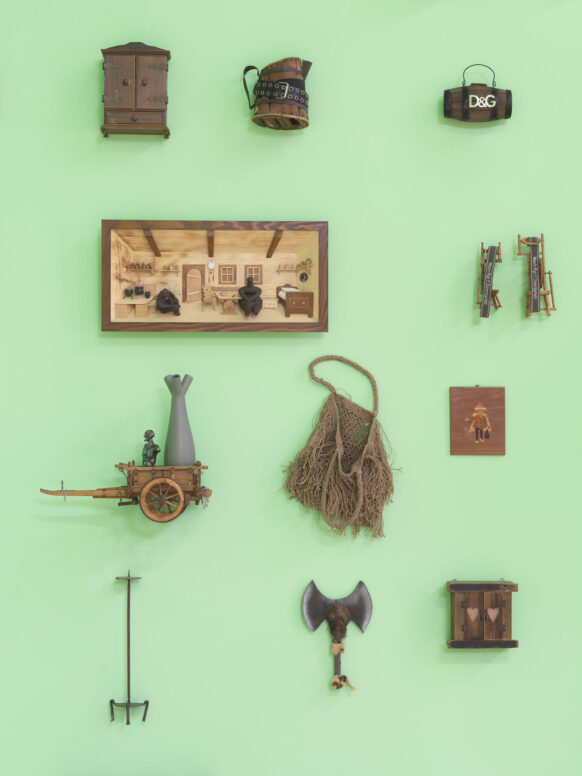
German Pavilion, 61th International Art Exhibition – La Biennale di Venezia, Henrike Naumann, Die Innere Front, 2026. Courtesy the Artist.

German Pavilion, 61th International Art Exhibition – La Biennale di Venezia, Henrike Naumann, Die Innere Front, 2026. Courtesy the Artist.
Photo: Jens Ziehe, Berlin

German Pavilion, 61th International Art Exhibition – La Biennale di Venezia, Sung Tieu, Installation View, German Pavilion, 2026. Courtesy the Artist.

German Pavilion, 61th International Art Exhibition – La Biennale di Venezia, Sung Tieu, Installation View, German Pavilion, 2026. Courtesy the Artist.
Photo: Andrea Rossetti
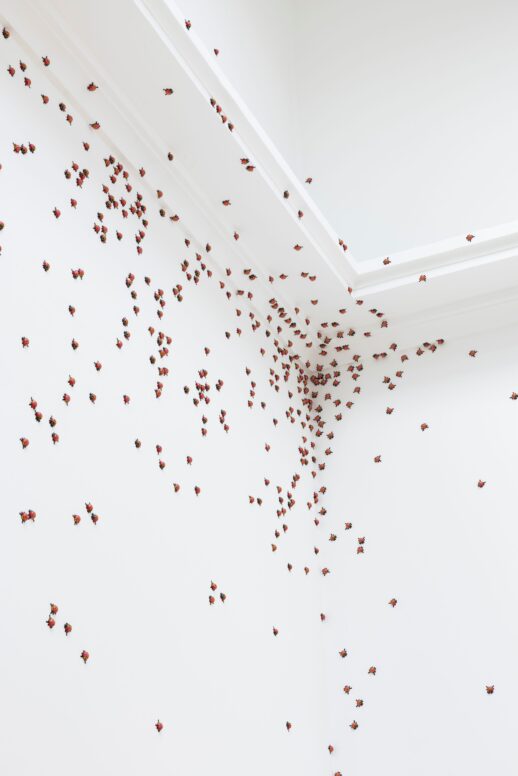
German Pavilion, 61th International Art Exhibition – La Biennale di Venezia, Sung Tieu, They Have Eyes, But They See Not, They Have Ears, But They Hear Not, 2026. Courtesy the Artist.

German Pavilion, 61th International Art Exhibition – La Biennale di Venezia, Sung Tieu, They Have Eyes, But They See Not, They Have Ears, But They Hear Not, 2026. Courtesy the Artist.
Photo: Andrea Rossetti

Photo: Andrea Rossetti

German Pavilion, 61th International Art Exhibition – La Biennale di Venezia, Henrike Naumann, Sung Tieu und Kathleen Reinhardt (from left to right)

German Pavilion, 61th International Art Exhibition – La Biennale di Venezia, Henrike Naumann, Sung Tieu und Kathleen Reinhardt (from left to right)
Photo: Victoria Tomaschko

German Pavilion Venice Biennale 2026

Ruin

German Pavilion Venice Biennale 2026

Ruin

Duration:

May 09 – November 22, 2026

Opening hours:

Giardini and Arsenale
May 9 –September 30: 11 am–7 pm
Until Sept. 30, only Arsenale: Fri & Sat. until 8 pm
October 1–November 22: 10 am–6 pm
Closed on Mondays (except 11/05, 1/06, 07/09, 16/11)

Venue:

German Pavilion
Giardini della Biennale
Sestiere Castello
30122 Venice, Italy

Tickets are available from the Venice Biennale at: www.labiennale.org.


Ruin transforms the German Pavilion into a space in which physical and social structures, German ideologies, and lived biographies materially overlap. With formal vocabularies spanning minimalist clarity and maximalist opulence, Sung Tieu and Henrike Naumann actively grapple with the Pavilion’s architecture, using it as an ambiguous mirror for contemporary social dynamics. Ruin refers not only to the decay of architecture, but also to political, moral, and financial collapse. Spaces of East German history—the vanished GDR Pavilion, the demolished Palace of the Republic, and the Sunflower House in Rostock-Lichtenhagen, site of the racist pogroms of 1992 against asylum seekers, former Vietnamese contract workers, and other migrant communities—serve as points of departure for addressing how historical absences create fractured temporalities that can be reconfigured through artistic imagination. The works presented in the Pavilion engage not with a past that has disappeared, but with one that continues to resonate in the present.

The Schering Stiftung supports the German Pavilion of the 61st International Art Exhibition – La Biennale di Venezia, taking place in Venice from May 9 to November 22, 2026. The German contribution is commissioned by the ifa – Institut für Auslandsbeziehungen.

Further information about the Finnish Pavilion can be found here.

Read more

Henrike Naumann was born in Zwickau (GDR) in 1984. Until her sudden death in February 2026, she lived and worked in Berlin. Naumann reflects on socio-political problems through design and interiors. She explores the friction between opposing political opinions through the lens of taste and personal everyday aesthetics. In her immersive installations, she arranges furniture and objects to create scenographic spaces in which she integrates video and sound works. Naumann’s artistic practice reflects upon mechanisms of radicalization and their connection to personal experience. It includes a wide range of lectures and interdisciplinary collaborations engaging with the central questions of her work. Most currently, she had been doing research on the relationship between art and war.

Naumann has been awarded numerous prizes, including the Karl Schmidt-Rottluff Scholarship, the Max Pechstein Prize of the City of Zwickau, the Leipziger Volkszeitung Art Prize and the Scholarship of Villa Aurora/Thomas Mann House, Los Angeles. Important exhibitions of her works have been held at the SculptureCenter in New York, the Busch- Reisinger Museum at Harvard University, the Museum of Modern Art Warsaw, the Haus der Kunst in Munich, the German Parliament as well as the Ghetto Biennale in Haiti (2015, 2017) and the Kyiv Biennale in Ukraine (2023). Henrike Naumann was a fellow at the Berlin Artistic Research Program 2024/25. She had accepted a professorship in sculpture at the University of Fine Arts Hamburg beginning in 2026.

From her nomination in May 2025 until her death, Henrike Naumann worked intensively on her contribution to the German Pavilion, completing the work before she passed. The team of the German Pavilion has been working alongside her studio team to bring her artistic vision to life.

Close

Sung Tieu, born in 1987 in Hải Dương, Vietnam, is a Vietnamese-German artist who lives and works in Berlin. Having grown up between political systems, Tieu’s work unfolds at the intersections of biography and geopolitics. Her practice examines the enduring aftershocks of the Cold War, colonial entanglements, and the subtle mechanisms of institutional power. It reflects the social and psychological effects of migration, bureaucracy, and state control. Through sculpture, painting, sound, video, photography, scent, text, and archival material, Tieu constructs spatially dense installations—environments in which political structures and personal experience converge and blur.

Currently, her works are on view as part of the 82nd Whitney Biennial at the Whitney Museum of American Art. Major solo exhibitions have been held at the KW Institute for Contemporary Art, Berlin; Kunsthalle Nürnberg; Amant Foundation, New York; MIT List Visual Arts Center, Cambridge; Kunst Museum Winterthur; Neuer Berliner Kunstverein (n.b.k.); Mudam – Musée d’Art Moderne Grand-Duc Jean, Luxembourg; Galerie für Zeitgenössische Kunst (GfZK), Leipzig; Haus der Kunst, Munich; and Nottingham Contemporary. She has also participated in the Taipei Biennial (2025), Gwangju Biennale (2024), Shanghai Biennale (2023), Bienal de São Paulo (2021), and Kyiv Biennale (2021). Tieu has received numerous awards, including the Schering Stiftung Award for Artistic Research (2024), the Rubens Promotional Award of the City of Siegen (2024), and the Audience Award of the Preis der Nationalgalerie (2021).

Close

Kathleen Reinhardt is the director of the Georg Kolbe Museum in Berlin, that has been awarded as “Museum of the Year 2025” by AICA Germany in the beginning of this year. Her curatorial practice in German as well as international contexts focuses on contemporary art, art in various political systems, and post-socialist practices, as well as the discursive potential of collections in the context of ideology, memory, and identity. She understands the museum as a space for artistic research and production and explores the role of feminist perspectives in reshaping institutional structures.

Reinhardt conducted research and earned her Ph.D. in African American art and socially engaged artistic practices at Freie Universität Berlin in the Department of Global Art Histories. She teaches internationally and publishes in exhibition catalogs, academic anthologies, and scholarly journals, including African Arts, Art Margins, Contemporary Art, and Kaleidoscope.

Close

Partners 

This Project is realized in cooperation with the following partner:
ifa-Institut für Auslandsbeziehungen


Newsletter 

Contact & social networks

Schering Stiftung

Unter den Linden 32-34
10117 Berlin

Telefon: +49.30.20 62 29 65
Email: info@scheringstiftung.de

Opening hours
Project space

Thursday to Monday: 2 pm - 8 pm
Saturday to Sunday: 12 am - 8 pm
free entrance

Follow us!

Follow us on our social media channels to find out the latest developments!

facebook Youtube Instagram