
Schering Stiftung

Prize winner 

Can Aztekin

Can Aztekin
Photo: Max Planck Institute for Biology Tübingen

Can Aztekin

Schering Young Investigator Award 2026

Can Aztekin
Photo: Max Planck Institute for Biology Tübingen

Can Aztekin

Schering Young Investigator Award 2026


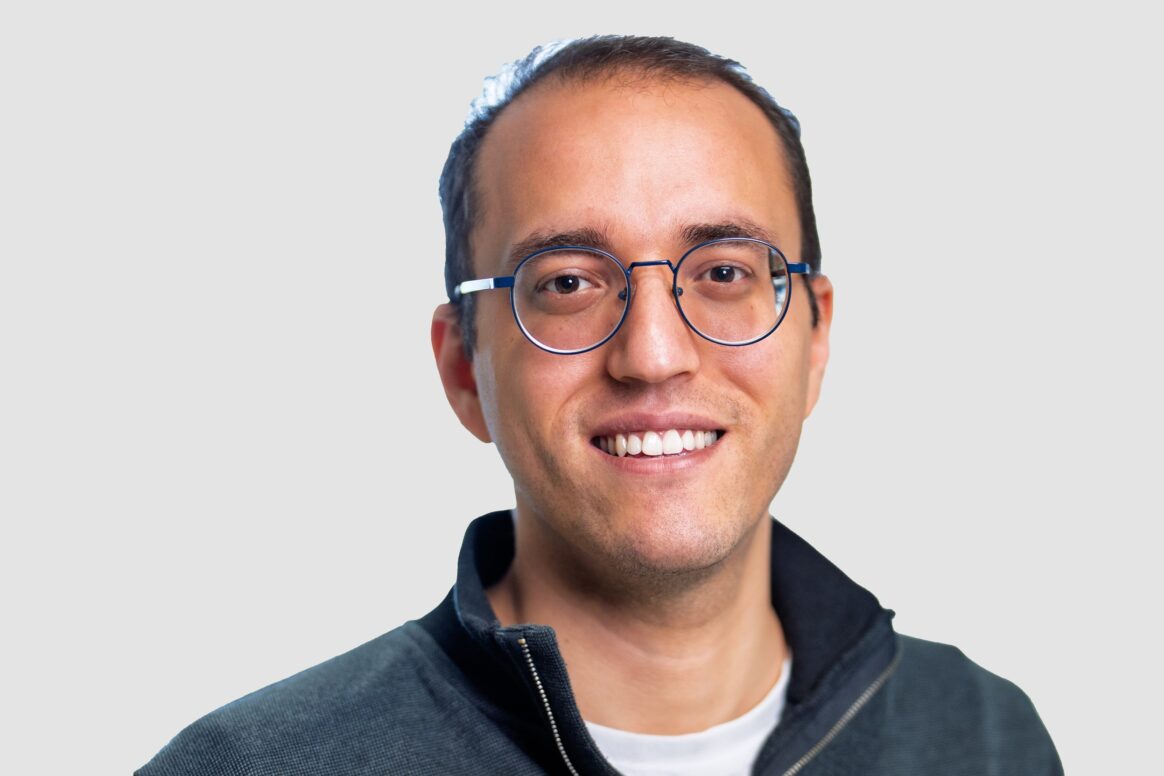
This year’s Schering Young Investigator Award will be presented to Dr. Can Aztekin, a group leader at the Friedrich Miescher Laboratory of the Max Planck Society in Tübingen. The scientist is honored for his groundbreaking work in the field of regenerative biology.

Dr. Aztekin investigates why mammals – unlike, for example, some frogs – are unable to regenerate limbs. He discovered that the necessary cellular potential lies dormant within the mammalian genome – but is blocked by atmospheric oxygen. His work paves the way for future regenerative therapies.

Dr. Can Aztekin is a group leader at the Friedrich Miescher Laboratory of the Max Planck Society in Tübingen and is regarded as one of the most promising young voices in regenerative biology. Having grown up in Turkey, he graduated with distinction before going on to complete his PhD at the University of Cambridge under the supervision of Nobel laureate Sir John Gurdon – a collaboration that has shaped his scientific career and brought him to international attention. His doctoral thesis led to a publication in the prestigious journal Science. In 2021– immediately after completing his PhD, and skipping the usual postdoc stage – he established his own research group at EPFL in Lausanne. This exceptional position underscores his extraordinary potential. Aztekin has received funding from the Branco Weiss Fellowship and an ERC Starting Grant, and was recently awarded the Rising Star Award by the International Society for Regenerative Biology.

Award Ceremony 2026 

Award ceremony — November 17, 2026

The Schering Stiftung awards the Ernst Schering Prize to Henrik Kaessmann. The Schering Young Investigator Award goes to Can Aztekin.

Materials 

Jury 

Friedhelm von Blanckenburg explores the Geochemistry of the Earth's surface by inorganic isotope geochemical and mass spectrometric methods.

Previously he has dealt with deciphering the processes in the interior of the Earth, such as the origin of granitic rocks in collisional mountains. This led him to propose the so-called "slab breakoff" hypothesis. He then turned his isotopic tools onto ocean sediments to determine the transfer of erosion products into the oceans.

Close

Prof. Dr. Alexander Bartelt

Else Kröner Fresenius Professor

Chair of Translational Nutritional Medicine, Technical University of Munich

Alexander Bartelt (*1982) deals with the molecular biology of metabolism and how it gets out of joint in obesity, fatty liver, diabetes and cardiovascular diseases. He has gained important insights into the molecular functioning of fat metabolism, fat cells and their interaction with the immune system. Through his work on nutrition, energy metabolism and thermogenesis, he is helping to shed light on the question of how weight gain and weight loss are regulated at the cellular level. His work places metabolic adaptation to stress factors at the center of the pathogenesis of complex cardiometabolic diseases.

Close

Markus List obtained his PhD in 2015 at the University of Southern Denmark and worked for two years as a postdoctoral fellow at the Max Planck Institute for Informatics. In 2018, he started a research group at the School of Life Sciences at the Technical University of Munich, where he was appointed as Assistant Professor in 2023.

Close

Nadine Biedenkopf is research group leader at the Institute of Virology at the Philipps University Marburg. Her research in the field of infection biology and virology focuses on highly pathogenic viruses, filoviruses, Ebola and Marburg virus.

Close

Tatiana Korotkova studied physiology in Moscow and earned her Ph.D. in Düsseldorf. After postdocs in Heidelberg and Berlin, she became group leader at FMP and head of the Neurocircuit Research Group at the MPI for Metabolism Research. She is now director at the Center for Physiology at th Cologne Excellence Cluster on Aging and Aging-Associated Diseases.

Close

Prof. Dr. Maja Köhn is a Schlegel Professor for Molecular Cell Biology at the University of Bonn and Managing Director of the Institute for Cell Biology. Her research focuses on phosphatases, proteins that play key roles in cellular signaling and are linked to diseases such as cancer and heart failure. She combines chemical tools with cell biology to study these enzymes.

Close

You might also be interested in

September 30, 2025

Dr. Agnes Toth-Petroczy

Schering Young Investigator Award 2025

Newsletter 

Contact & social networks

Schering Stiftung

Unter den Linden 32-34
10117 Berlin

Telefon: +49.30.20 62 29 65
Email: info@scheringstiftung.de

Opening hours
Project space

Thursday to Monday: 2 pm - 8 pm
Saturday to Sunday: 12 am - 8 pm
free entrance

Follow us!

Follow us on our social media channels to find out the latest developments!

facebook Youtube Instagram